

Molecular Diagnostics — Greenhouse Solanaceae

Tomato Virus Scan

35+ validated targets. Purpose-built for tomato and pepper greenhouse production. A curated molecular diagnostic panel — not a generic screen.
35+ validated targets
All sample types accepted
Ct values included
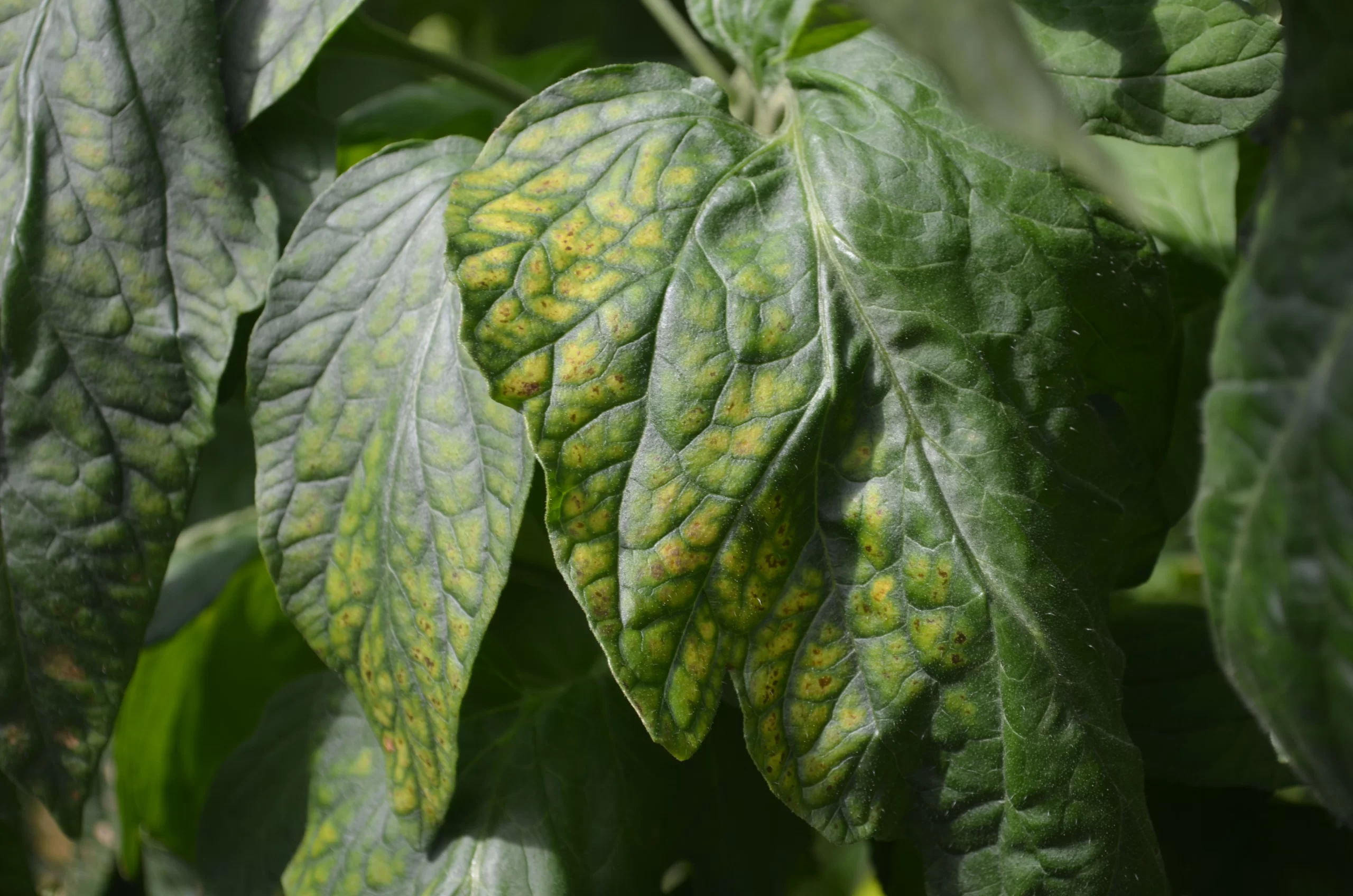
Tomato leaves showing ToBRFV virus symptoms
What You Get

Diagnosis for every
stage of your operation

Whether you're chasing a symptom, screening incoming stock, or running a scheduled monitoring program — this panel is designed for real operational decisions, not just lab reports.

Symptom confirmation
Early or ambiguous symptoms where visual diagnosis isn't enough to act on.
Incoming material screening
Plant material and propagation stock screening before it enters your operation.
Post-sanitation verification
Confirm clean status before replanting after a contamination or removal event.
Routine monitoring
Zone and crop-cycle surveillance across your operation on a regular basis.
Hotspot investigation
After a labour event, tool concern, or localized symptom cluster in a zone.
Sample types accepted
Plant Tissue Irrigation Water Surface Swabs Seed Lots Seedlings
Available Add-On
ToBRFV Viability Testing

Detects whether ToBRFV particles are still infectious — not just present. Supports auditable clean certification decisions and restart confidence after a contamination event.

Real case

A sample submitted suspected ToBRFV turned out to be PepMV — a completely different pathogen requiring a different response. Accurate diagnosis changes the decision.

Ready to submit your first sample?
The submission form takes under two minutes. We'll confirm panel recommendation, sample requirements, and next steps.
The Panel

Curated, not broad-spectrum.
Every target selected for a reason.

Each of the 35+ targets was selected for its regulatory significance, transmission risk in protected cultivation, or economic impact on North American Solanaceae production. Organized by threat tier — not alphabetically.

Tier 1 Critical — Regulatory & Resistance-Breaking Targets
ToBRFV PepMV TYLCV TSWV

Highest regulatory scrutiny and economic impact across Canadian and North American greenhouse tomato and pepper production.

Tier 2 Quarantine Pospiviroids
PSTVd TCDVd CLVd TASVd TPMVd CEVd PCFVd

Regulated quarantine pathogens. Relevant for lot certification, import/export compliance, and seed propagation programs.

Tier 3 NAPPO Nepovirus Targets
ToRSV ArMV ToBRV TRSV

NAPPO regulated targets with potential for significant crop loss in susceptible Solanaceae varieties.

Tiers 4–6 Emerging, Surveillance & Latent Targets
Criniviruses Whitefly-borne Aphid-borne co-infection Nematoviruses Latent agents

Emerging threats, vectored co-infection risks, and latent surveillance targets for operations running comprehensive monitoring programs.

How It Works

From submission to results

Request

Submit sample details. Receive confirmed panel recommendation, sample requirements, and submission instructions.

Ship

Package and ship to spec. Every sample type has documented handling protocols and chain-of-custody documentation.

Results

Delivered with Ct values, tier-coded interpretation, and documentation ready for certification or audit use.

Pricing

Transparent pricing.
No surprises.

Add-On
ToBRFV Viability Testing
Add-on to standard panel

Determines whether detected ToBRFV particles are still infectious — not just present. Designed for post-sanitation certification decisions.

Viability result alongside standard detection
Supports auditable clean certification
Restart confidence after contamination event

Pricing is confirmed during the submission process. For monitoring programs, multi-site accounts, or recurring submissions — mention it in your request and we'll provide appropriate rates.

FAQ

Common questions

Plant tissue, irrigation water, surface swabs, seed lots, and seedlings are all accepted. Each sample type has its own handling and preservation protocol. When you submit your request, we'll confirm the exact requirements for your specific sample.
We provide documented handling protocols for each sample type after you submit your request. Shipping instructions, preservation requirements, and chain-of-custody documentation are all included. You do not need to figure out shipping logistics on your own.
Results include detection status for all 35+ targets in the panel, Ct values for every positive detection, and a tier-coded interpretation report. Ct values let you distinguish strong positives from weak or borderline detections — you get numbers, not just flags.
Standard molecular detection confirms whether ToBRFV genetic material is present — it does not tell you whether the virus is still infectious. Viability testing answers that question. It is most useful after a sanitation event, when you need documentation that the virus has been inactivated before replanting or recertifying a zone.
Turnaround time is confirmed when you submit your request. It depends on sample type and current lab queue. If you have a deadline — such as a replanting window or a certification requirement — mention it in your request and we'll let you know if it can be met.
Yes. Multi-sample submissions are handled regularly. Each sample is processed and reported individually. If you're running a monitoring program across multiple zones or crop cycles, let us know when you submit — we can discuss structured monitoring rates.
Yes. We accept samples from commercial greenhouse operations across Canada. Shipping protocols are documented for Canadian conditions. If you're outside Canada and interested, reach out — we'll confirm whether your submission context can be accommodated.