

Peat, Nurseries, and Science
Introduction
Peat moss has been a staple in nurseries for decades, valued for its ability to retain moisture, provide structure, and help buffer pH levels. However, despite its many advantages, peat isn’t without its challenges. Growers using peat-based media often face issues related to pathogen risks, nutrient imbalances, water retention problems, and transplant shock.
In partnership with SGS Crop Science, we created this blog to explore scientific, research-backed insights on these challenges and provide practical solutions to help nursery growers make informed decisions about peat use.
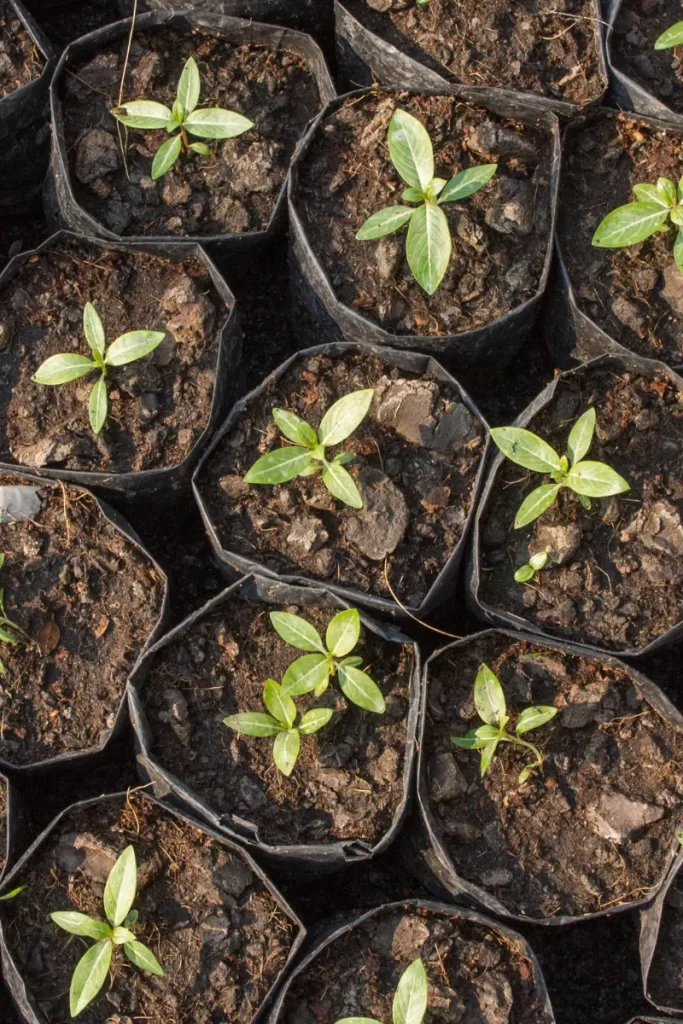
1. Pathogen Risks in Peat and Nurseries
Peat moss is often considered low in pathogens because it originates from remote bogs. However, it is not sterile and can harbor plant diseases if contaminated during handling or storage (USDA Forest Service, 2012).
Key Pathogens to Watch
-
- Pythium spp. – Pythium species are commonly found in nursery media components like soil, sand, and pumice. However, light sphagnum peat has a natural suppression because of its diverse microbial community (e.g., Bacillus, Trichoderma) that competes with pathogens. Darker, decomposed peat lacks this suppressiveness
- Phytophthora spp. – Phytophthora root rot originates from contamination or irrigation water rather than the peat itself. Peat’s microbial community can suppress pathogens if uncontaminated, but excess use can lead to poor drainage and excessive water retention in the root zone. Less frequent than Pythium, but can cause severe crown and root rot
- Fusarium spp. – Peat moss, with its acidic pH (3.0–4.5), high moisture content, and high carbon content, can provide a suitable environment for Fusarium survival and growth. It causes vascular wilt diseases.
Extra Resources
You can read more about Pythium spp. here:
- Occurrence of Pythium spp. in New Zealand soils, sands, pumices, and peat, and on roots of container-grown plants: https://www.tandfonline.com/doi/abs/10.1080/00288233.1973.10421116
- Greenhouse Plants, Ornamental-Pythium Seed Rot, Damping-off, and Root Rot: https://pnwhandbooks.org/plantdisease/host-disease/greenhouse-plants-ornamental-pythium-seed-rot-damping-root-rot
- Pythium Root Rot of Herbaceous Plants: https://www.extension.purdue.edu/extmedia/bp/bp-181-w.pdf
- Disease-Suppressive Media: https://gpnmag.com/article/disease-suppressive-media/
You can read more about Phytophthora spp. here:
- Phytophthora root disease and the need for clean nursery stock in urban forests: Part 3. Prevention and management: https://www.fs.usda.gov/psw/publications/frankel/psw_2019_frankel002_swiecki.pdf
- Phytophthora diseases – problematic in the nursery and beyond: https://www.horticulture.com.au/globalassets/hort-innovation/resource-assets/ny11001-phytophthora-diseases.pdf
- Phytophthora and Pythium root rot: https://www.nurserymag.com/article/nursery-0111-plant-health-phytophthora-pythium-root-rot/#:~:text=Avoid%20using%20fine%20materials%20in,soaked%20in%20disinfectant%20or%20steamed.
- Phytophthora root and crown rot—Phytophthora spp.: https://ipm.ucanr.edu/PMG/GARDEN/FRUIT/DISEASE/pchphytoph.html#:~:text=Life%20cycle,from%20one%20place%20to%20another.
You can read more about Fusarium spp. here:
- Fusarium wilt: https://extension.umn.edu/disease-management/fusarium-wilt
- Saprophytic and Potentially Pathogenic Fusarium Species from Peat Soil in Perak and Pahang: https://pmc.ncbi.nlm.nih.gov/articles/PMC4807956/
- Naughty Peat: A case study in plant pathology, with emphasis on Koch’s Postulates and disease etiology: https://www.apsnet.org/edcenter/learningPP/Pages/NaughtyPeat.aspx
- Biological control of Fusarium oxysporum causing damping-off and Pythium myriotylum causing root and crown rot on cannabis (Cannabis sativa L.) plants: https://www.tandfonline.com/doi/full/10.1080/07060661.2023.2172082
Natural Suppression & Storage Tips
The good news? Sphagnum peat contains natural microflora that suppresses pathogens by competing for nutrients. However, improper peat storage (warm, humid conditions) can lead to mold growth, interfering with water absorption.
💡 Grower Tip: Store peat in cool, dry conditions and avoid prolonged moisture buildup to reduce disease risk.
Check out Pathogen Mini or Pathogen Scan (Basic), a quick and accurate test for Pythium, Phytophthora, and Fusarium. For persistent and difficult symptoms, try Pathogen+ for a complete and comprehensive scan of all potential disease-causing microbes.
- Quick and accurate detection of single pathogens like Pythium spp. (all species), Phytophthora spp., and Fusarium spp.
- Sample types: Water, roots, or leaves. Results in 2-3 business days.
- Monitors 31 common pathogens, including Pythium, Phytophthora, and Verticillium.
- Ideal mid-level scan to ensure the peat’s microbial community remains suppressive.
- Identifies 500+ pathogens, including fungi (Fusarium), oomycetes (Pythium, Phytophthora), and bacteria.
- Helpful in routine checks to track pathogen trends over time in peat storage or irrigation systems.
We provide great overviews of many agricultural microorganisms. Subscribe to stay updated!
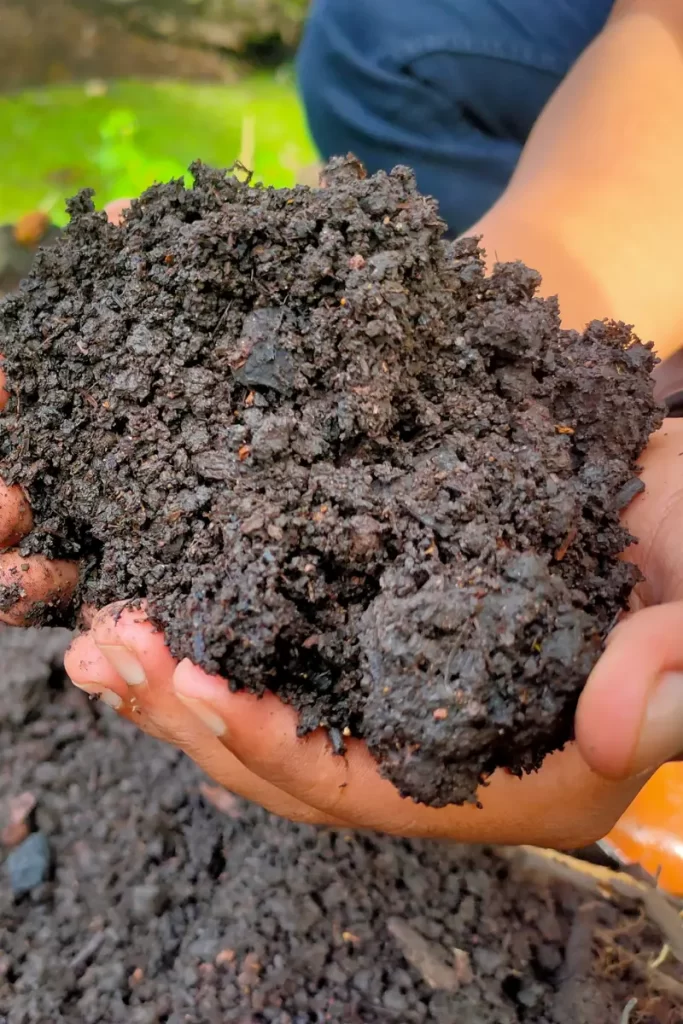
2. Nutrient Balance in Peat-Based Media
Peat is known for holding onto nutrients due to its high cation exchange capacity (CEC), which can also create imbalances https://www.sciencedirect.com/science/article/abs/pii/B9780444529756500137.
Common Challenges
- Calcium Lockout: Peat binds calcium, especially in hard water regions, which can cause twisted or distorted leaves.
- Magnesium Deficiency: Peat’s high CEC prioritizes calcium uptake over magnesium, leading to interveinal chlorosis.
- Phosphorus Deficiency: Peat’s natural pH (3.0–4.5) can reduce phosphorus availability by up to 40%, causing stunted root growth.
Extra Resources
Curious about how nutrient balance in peat affects growing? Check out these sources:
- What Is Your Substrate Trying to Tell You (Part II): https://www.uidaho.edu/-/media/uidaho-responsive/files/extension/topic/nursery/technical/cec-and-cn-ratio.pdf?la=en&rev=c2bb3db21bb0499f9792fe310c497a23
- Cation Exchange Capacity (collection): https://www.sciencedirect.com/topics/agricultural-and-biological-sciences/cation-exchange-capacity#:~:text=The%20high%20CEC%20values%20mean,N%20present%20in%20nitrate%20form.
- Cation Exchange Capacity and Base Saturation Variation among Alberta, Canada, Moss Peats: https://journals.ashs.org/hortsci/view/journals/hortsci/42/2/article-p349.pdf
Solutions for Growers
✔️ Lime Peat-Based Media: Adjust pH to 5.5–6.5 before planting.
✔️ Supplement with Magnesium: If using dolomitic lime, check magnesium levels to avoid deficiencies.
✔️ Manage Phosphorus Availability: If the pH is too low, phosphorus gets “locked up.” Adjust with lime if needed.
For nutrient imbalances, SGS’s Water & Nutrient Solution Analysis and Plant Tissue Analysis are invaluable tools. These services help identify calcium-magnesium ratios and phosphorus availability, diagnosing deficiencies like interveinal chlorosis due to magnesium shortages. By adjusting the pH and supplementing with magnesium, growers can mitigate these issues.
SGS Water & Nutrient Solution Analysis (Complete Solution)
- Tests pH, EC, Ca, Mg, P, and 15+ other parameters.
- Identifies calcium-magnesium ratios and phosphorus availability in peat-based media.
SGS Plant Tissue Analysis (Complete)
- Includes N, P, K, Mg, Ca, S, Zn, Cu, Fe, and B.
- Diagnoses nutrient deficiencies (e.g., interveinal chlorosis from Mg shortage).
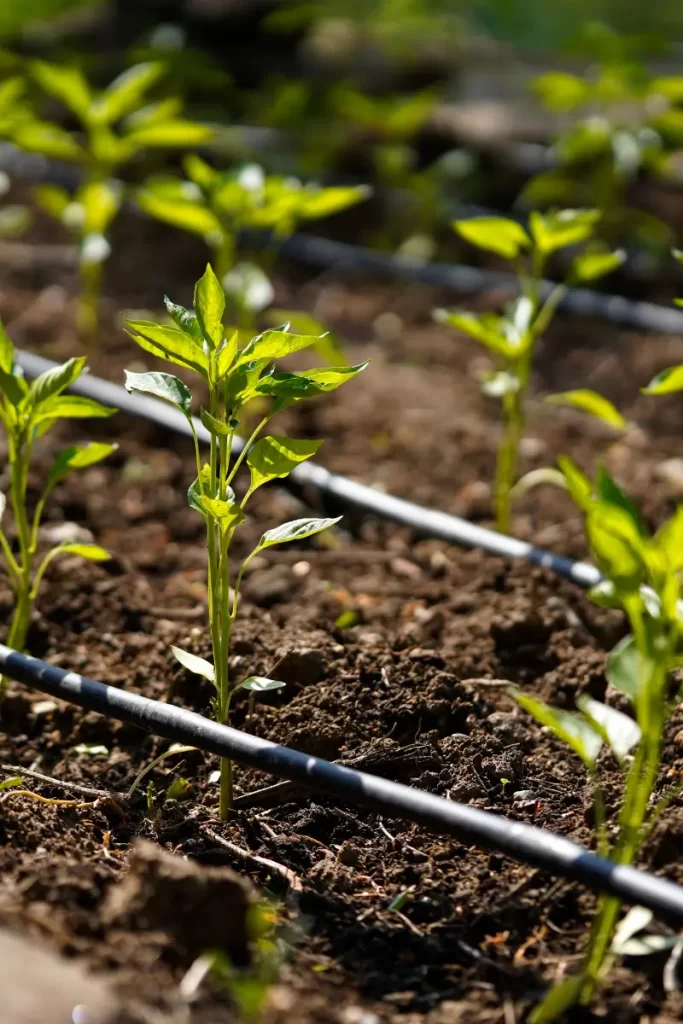
3. Peat’s Hydrophobic Problem in Nurseries
Peat holds water well when moist, but when it dries out completely, it becomes hydrophobic—repelling water instead of absorbing it.
Challenges Caused by Hydrophobic Peat
- Dry Pockets: Roots in these areas can suffer moisture stress even if irrigation is increased.
- Shrinkage: Decomposed peat pulls away from container edges, making rehydration harder.
- Increased Water Costs: Hydrophobic peat requires up to 20% more irrigation to thoroughly wet the substrate.
Extra Resources
Take a look and learn more about peat’s hydrophobic properties from these sources:
- Hydrophilic and hydrophobic characteristics of dry peat: https://www.researchgate.net/publication/322690193_Hydrophilic_and_hydrophobic_characteristics_of_dry_peat
- Hydrophobicity of peat soils: Characterization of organic compound changes associated with heat-induced water repellency: https://www.sciencedirect.com/science/article/abs/pii/S004896971936440X, https://bygl.osu.edu/node/1494 .
Fixing the Issue
✔️ Use Wetting Agents: Surfactants improve peat’s ability to reabsorb water.
✔️ Monitor Peat Age: Older peat has a more challenging time rehydrating—use fresh substrate when possible.
✔️ Avoid Over-Drying: Keeping peat evenly moist prevents it from becoming hydrophobic in the first place.
To combat water retention problems and hydrophobicity, use Media Analysis from SGS to assess peat decomposition and moisture content. This helps identify when peat becomes hydrophobic, allowing for timely interventions like wetting agents or replacing old peat. Additionally, Green Roof Packages can evaluate water-holding capacity and air-filled porosity, optimizing peat blends for better water absorption.
- Measures pH, EC, moisture, and organic matter content
- Assesses peat decomposition levels contributing to hydrophobicity.
SGS Green Roof Packages (Physical Properties)
- Evaluates water-holding capacity, air-filled porosity, and hydraulic conductivity.
- Helps optimize peat blends to prevent hydrophobic behavior.
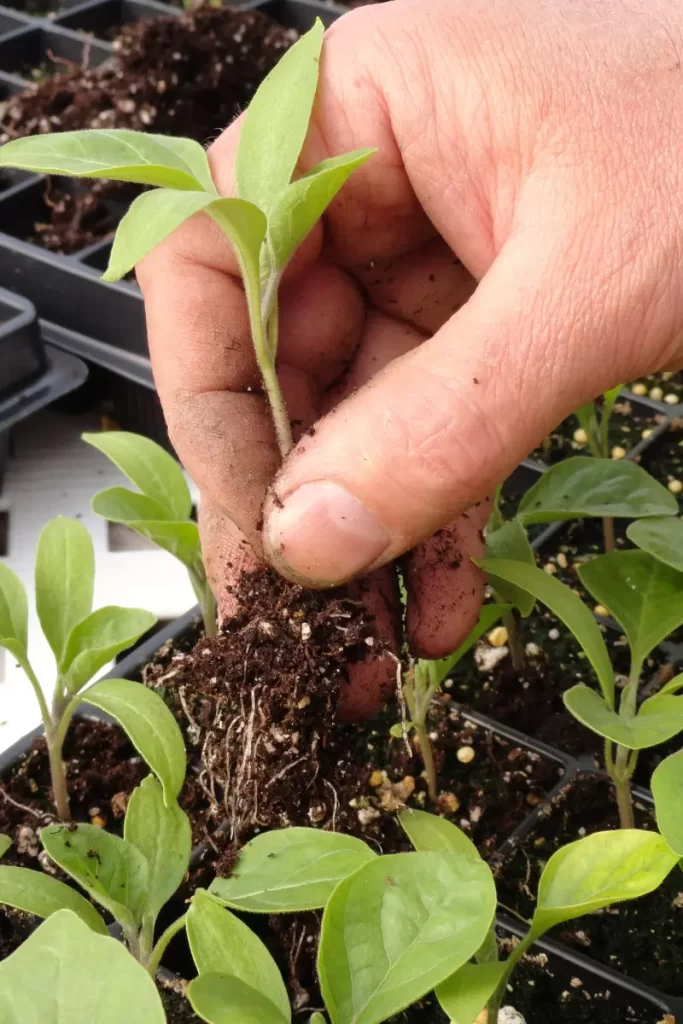
4. Transplant Shock & Peat Breakdown
Peat’s structure breaks down over time, which can increase transplant stress by affecting root stability and oxygen availability.
Why Peat Causes Transplant Shock
- Root Destabilization: As peat decomposes, it collapses, damaging delicate root hairs during transplanting
- Oxygen Deprivation: Compacted peat reduces air-filled porosity, suffocating roots
Extra Resources
More on peat breakdown and transplant shock in the articles below.
- Mangrove Peat Collapse Following Mass Tree Mortality: Implications for Forest Recovery from Hurricane Mitch: https://cedar.wwu.edu/cgi/viewcontent.cgi?article=1038&context=esci_facpubs
- Toward a mechanistic understanding of “peat collapse” and its potential contribution to coastal wetland loss: https://pmc.ncbi.nlm.nih.gov/articles/PMC6850666/
- The impact of substrate and irrigation interval on the post-transplant root growth of container-grown zinnia and tomato: https://meridian.allenpress.com/jeh/article/35/1/1/80396/The-impact-of-substrate-and-irrigation-interval-on
- Transplant Shock of Trees and Shrubs: https://www.extension.purdue.edu/extmedia/bp/bp-31.html
How to Reduce Transplant Shock
✔️ Blend Peat with Pine Bark: A 1:1 mix of peat and bark improves drainage and aeration.
✔️ Choose a Coarser Peat Blend: Fine peat compacts more easily; using a coarser grade improves root stability.
✔️ Monitor Decomposition: If peat is too broken down, replace or amend it before transplanting.
To reduce transplant shock caused by peat breakdown, SGS’s Media Analysis can track structural stability indicators, detecting early signs of decomposition. Furthermore, blending peat with pine bark or using coarser peat grades can improve drainage and aeration, reducing root destabilization and oxygen deprivation during transplanting.
SGS Media Analysis (Basic/Complete)
- Tracks pH, EC, and structural stability indicators (e.g., organic matter).
- Detects peat decomposition early to avoid transplant stress.
Disclaimer
The information we present in this blog is based on collating published peer-reviewed scientific literature, and sources we think are reliable. This is by no means an exhaustive review of pathogens. This blog gives a small glimpse of what is known about pathogens. We encourage growers to do more research on the pathogens concerning their crops and hydroponic systems. We are not plant pathologists; thus, the information presented should not be used as professional advice to treat pathogens or operate your system.

David Santos is the CMO of Healthy Hydroponics InnoTech